




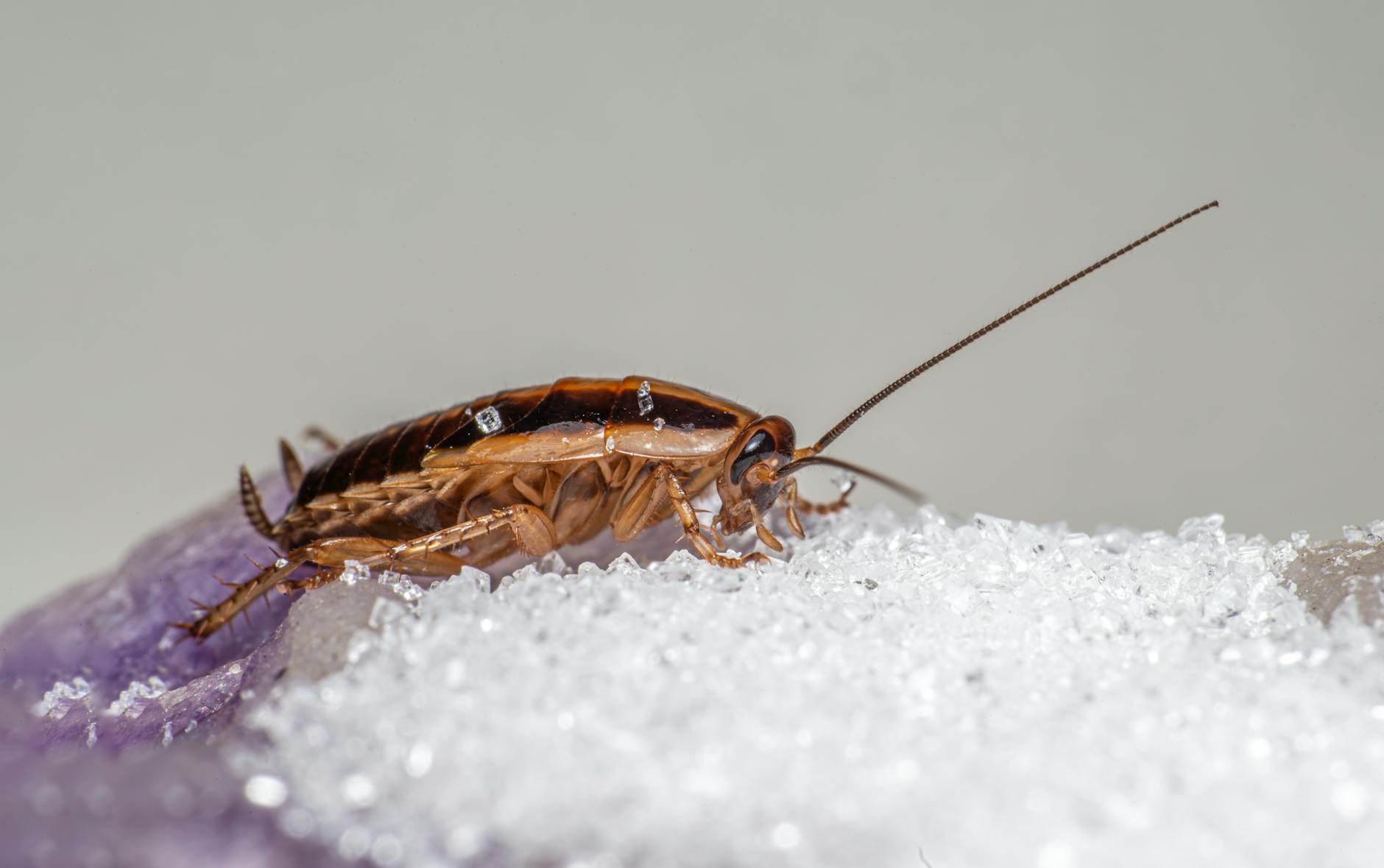
Wood-Feeding Cockroaches Forge Unbreakable Bonds by Devouring Each Other’s Wings
In a display of seemingly bizarre love, wood-feeding cockroaches were recently found to engage in a unique ritual that strengthens their pair bonds—by eating each other's wings. This behavior not only signals commitment but also transforms them into a formidable fighting force against intruders and would-be mates.
Cannibalism as a Commitment Signal
Researchers studying the wood-feeding cockroach, Salganea taiwanensis, uncovered an intriguing aspect of their mating rituals, now revealed in findings published in Royal Society Open Science. The cockroaches exhibit long-term monogamous pair bonding, and their commitment is biologically signaled through an act of cannibalism: the male and female gnaw off each other’s wings. This not only leaves the insects wingless but also appears to solidify their partnership.
Behavioral ecologist Haruka Osaki from the Museum of Nature and Human Activities in Hyōgo, Japan, sheds light on this phenomenon, explaining that these cockroaches have developed a strong social structure despite being insects. “Once coupled, they build nests and rear their offspring together, cohabiting for life,” Osaki noted.
Why Eat the Wings?
While it may sound gruesome, the wing consumption holds practical benefits. As Lars Chittka, a behavioral ecologist at Queen Mary University of London, suggests, wings could easily get stuck in the roaches' nests, which are often located in decayed wood. Additionally, the chemical signatures released during the ritual could play a role in helping the pair identify each other in the future.
“It’s a built-in ‘stay-and-invest’ signal for both parties, exactly the sort of irreversible step that often stabilizes cooperation in pair-living species,” explains Chittka, emphasizing the evolutionary significance of this unusual behavior.

The Power of Unity
To understand the effects of this wingless state on the cockroaches’ behavior, Osaki and her team conducted experiments with pairs of roaches. Some had engaged in the wing-eating ritual while others had not. Upon introducing intruders, researchers found a stark difference in reactions. Only one male from the non-wing-eating pairs engaged in aggressive behavior towards an intruder. However, in pairs that had consumed each other’s wings, both members aggressively defended their territory, even attacking other potential mates.
The dynamics shifted significantly, with both male and female cockroaches acting like tiny insect bulls—ramming intruders in defense of their nest. Osaki remarked, “The behavior is arguably the crispest demonstration of a ‘bond like’ pairing in an insect so far.”
Rethinking Insect Behavior
These findings challenge previous assumptions about insect social structures, which many might view as simplistic. “Our study shows that insects can form stable and selective partnerships,” says Osaki, broadening our understanding of social behaviors in the animal kingdom.
While it’s still unclear how the bond functions when one partner is away, the research opens the door to further exploration into loyalty and cooperation in various species, highlighting that even a cockroach, often regarded as a pest, demonstrates capable emotions and relationships.
Conclusion
This fascinating insight into the mating rituals of Salganea taiwanensis invites us to rethink what commitment looks like beyond the realm of mammals and birds. Through acts of mutual sacrifice and aggressive loyalty, these wood-feeding cockroaches not only survive but thrive together, proving that even the least glamorous of creatures can teach us valuable lessons about love and partnership.
For further information and updates on animal behaviors, visit Science News – Animals.