




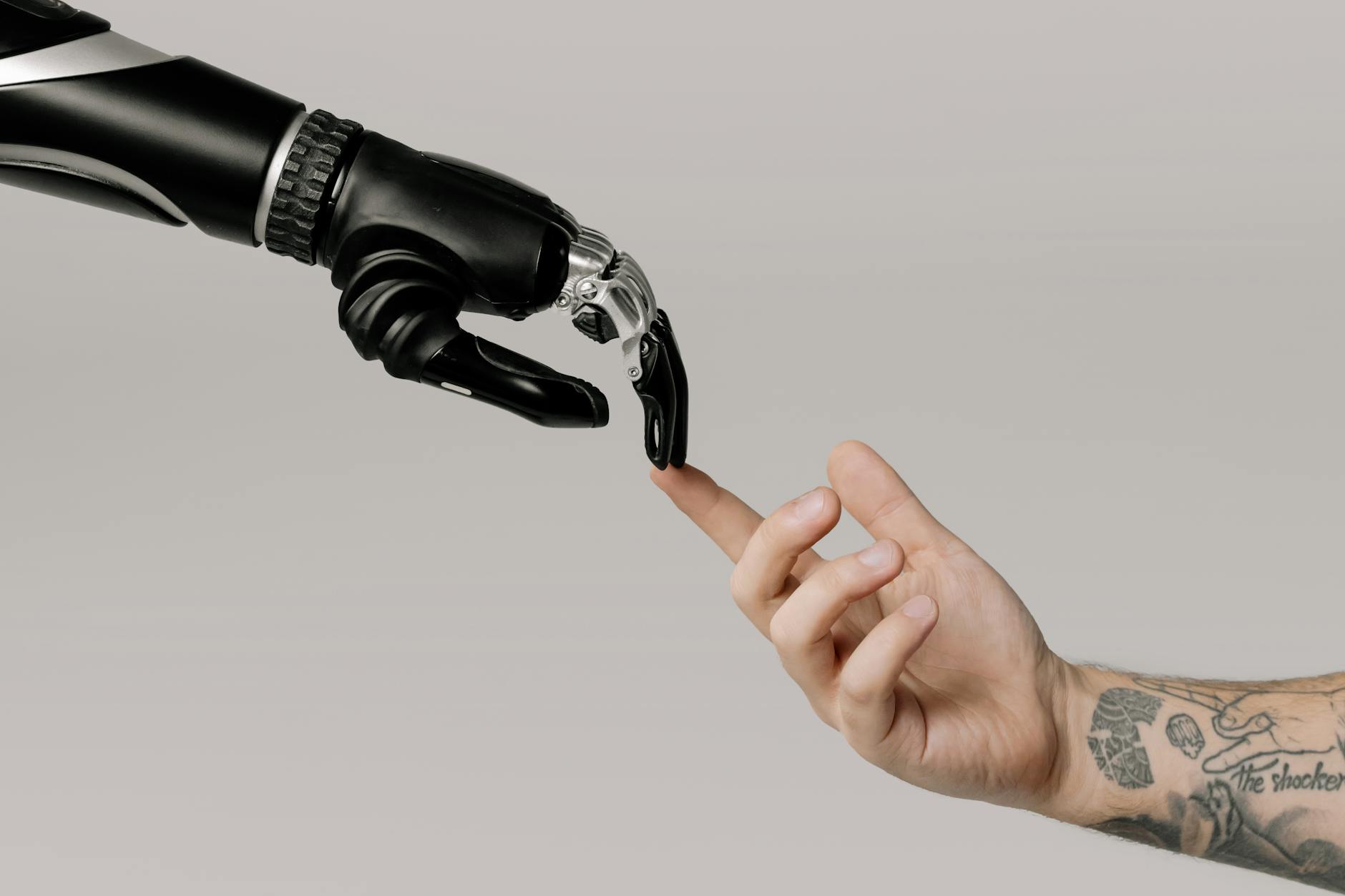
Robotic Revolution: The Birth of Nail-Tipped Hands for Enhanced Grasping Abilities
In an exciting leap for robotics, a team of researchers has unveiled a pioneering design for a three-fingered robotic hand complete with fingernails made from rigid materials. This innovative design not only resembles human anatomy but also significantly enhances the robotic hand's functionality. The study indicates that these nail-tipped fingers can perform complex tasks like peeling fruit, opening containers, and deftly picking up a variety of objects, a breakthrough poised to transform both everyday tasks and industrial applications.
The Shape of Progress
Traditional robotic hands are typically equipped with soft pads that sit atop a rigid structure, giving them a somewhat square fingertip shape. However, the new design features a soft material wrapped around a finger “skeleton” topped with a rigid nail. Dong Ho Kang, a mechanical engineer at the University of Texas at Austin, explains the advantages, saying, “A square shape only adapts well to forces coming straight on, but our design can also respond flexibly to twisting or side forces.”
This development mirrors the human hand's design, where fingernails provide additional stability and precision. Research indicates that traditional soft fingertips can adapt well owing to their flexibility, but this same feature often compromises grasp precision. The rigid fingernails alleviate this issue by providing a firm surface that effectively directs pressure, enhancing the grip.
From Inspiration to Application
The researchers conducted extensive tests with robotic fingers featuring nail components. They observed the fingers grasping various objects – from flat surfaces to outward-bulging and inward-curved forms – while undergoing upward pulling motions. The results were striking: fingertip designs that included nails exhibited a significantly stronger grasping force compared to their nail-less counterparts.
Kang noted that fingernails particularly excelled in grasping curved objects, crucial for many everyday applications. While the nail-less soft fingers struggled to hold onto items and often failed to interact effectively with edges, the fingernail-equipped fingers shined in tasks requiring fine motor skills, such as extracting a single sheet from a stack of papers, successfully opening the lid of a sealed container, and retrieving thin objects like coins and playing cards.
The Future of Robotics
The research not only heralds advancements in robotic design but also sets the stage for further development. Kang aims to extend these concepts into a complete robotic hand, potentially revolutionizing how robots interact with their environments. The implications of such technology stretch across numerous fields, including manufacturing, retail, and health care, where dexterity is paramount.
As researchers continue to innovate in the robotics landscape, one thing is clear: the future may well be filled with robots that not only mimic human movements but also enhance them, thanks to creative solutions inspired by our own biology.
For readers interested in technological advancements, stay tuned for more groundbreaking stories in the world of science and technology.