



2025: A Year of Cosmic Wonders and Groundbreaking Astronomy Discoveries
As we close the chapter on 2025, a year filled with remarkable advances in the field of astronomy and space exploration, we take a moment to reflect on some of the most captivating stories that have sparked our imaginations and expanded our understanding of the universe. From interstellar visits to the intricacies of Martian weather, these discoveries serve as a testament to humanity's enduring curiosity about the cosmos.
A Rare Interstellar Visitor: Comet 3I/ATLAS
In July 2025, our solar system welcomed an interstellar guest, comet 3I/ATLAS, marking only the third time a known interstellar object has passed through our cosmic neighborhood. Discovered by the ATLAS survey telescope in Chile, this comet has provided scientists with a host of intriguing phenomena, including a tail that has developed as it approached the Sun at speeds exceeding 200,000 kilometers per hour.
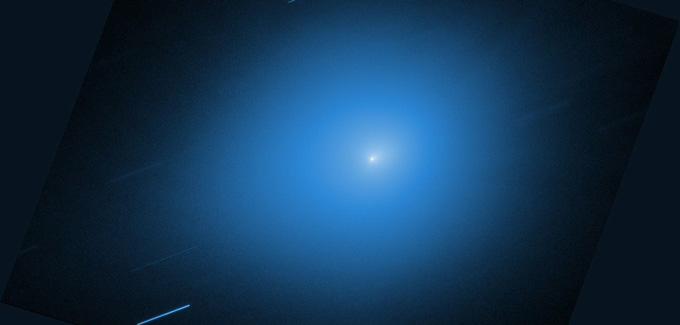
Image of comet 3I/ATLAS captured by the Hubble Space Telescope.
Scientists have noted signs of icy volcanism, stirring discussions about its origins—though rest assured, it is not an alien spacecraft as some theories have posited. Even after its closest approach to Earth on December 19, at a safe distance of 270 million kilometers, 3I/ATLAS is expected to remain observable through spring 2026 as it veers back into interstellar space.
Lightning Strikes on Mars
Mars continues to surprise researchers with phenomena that parallel certain Earthly conditions. This year, NASA's Perseverance rover picked up the sounds of what appeared to be a kind of "mini-lightning" in the Martian atmosphere, attributed to triboelectricity—a process where dust particles collide and generate electrical charges.
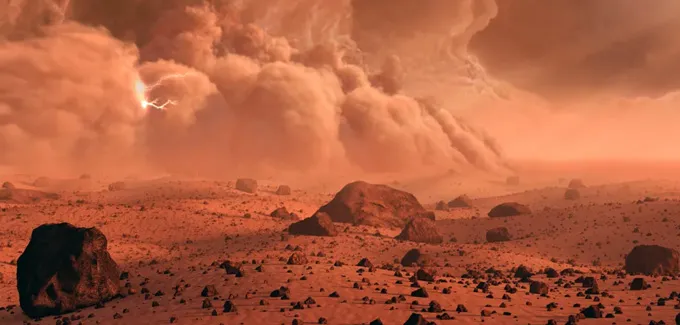
Visual depiction of lightning on Mars.
Previously, the sounds captured during dust devil events were thought to arise from dust impacts on the rover's microphone, but a breakthrough analysis suggested otherwise, opening up new insights into Martian weather patterns and electric discharge phenomena.
Betelgeuse’s Hidden Companion
The enigmatic red supergiant star Betelgeuse has long been the subject of interest due to its pulsating brightness and potential to explode as a supernova. This year, astronomers captured an image of a potential companion star—an elusive companion that is believed to orbit Betelgeuse roughly every 2,000 days.
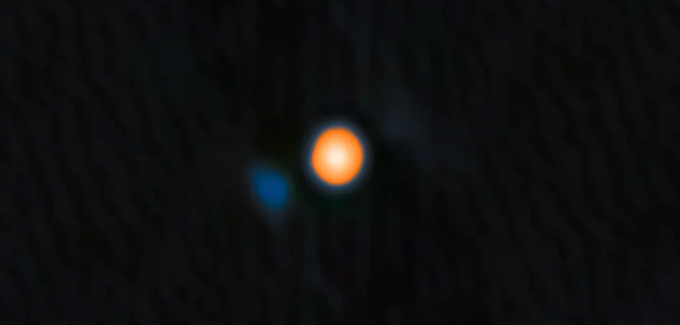
A faint blue dot, possibly Betelgeuse's companion star, captured in a 2025 image.
The discovery of this star provides further evidence that Betelgeuse is part of a binary system, and if confirmed, it could be named Siwarha. However, it faces an eventual demise as its orbit takes it into Betelgeuse's atmosphere over the next 10,000 years.
Artificial Eclipses: Innovations in Solar Observation
The innovative Proba-3 spacecraft, launched in late 2024, mastered the art of creating artificial solar eclipses to enhance solar observations. By synchronizing two spacecraft to block the Sun’s glare, scientists have been able to capture unprecedented images of the Sun’s corona.
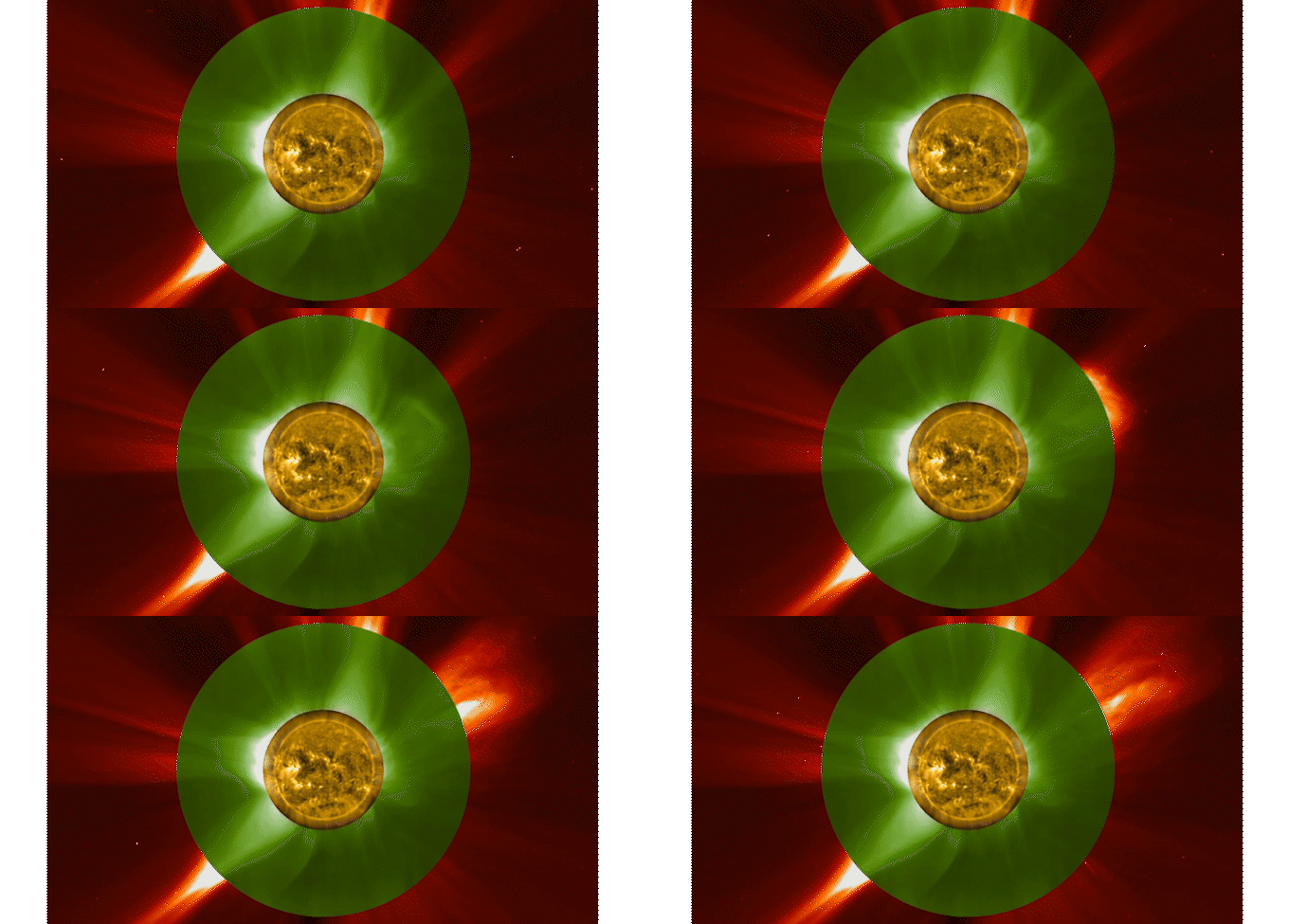
Diagram illustrating solar eclipses created by the Proba-3 mission.
Since July, Proba-3 has executed over 51 eclipses, and with additional observations planned, it stands on the frontier of solar research, allowing scientists to glean insights into solar activity that were previously obscured.
The Vera Rubin Observatory Initiates a Cosmic Survey
In a landmark moment for astronomy, the Vera Rubin Observatory began its ten-year survey of the southern night sky in 2025. This facility is poised to capture every detail of the cosmos, allowing astronomers to observe changes in cosmic phenomena in a flipbook-like format.
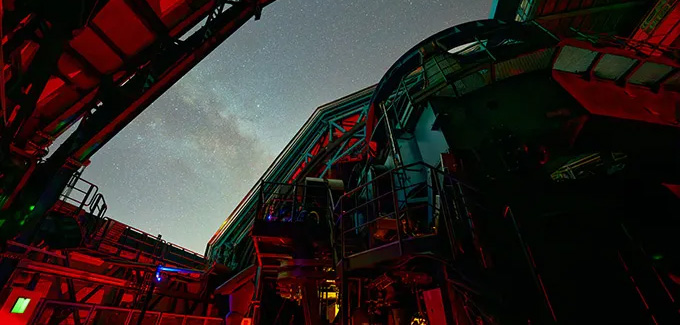
The Vera Rubin Observatory, set to revolutionize sky observation.
This extensive survey will enhance our understanding of events like supernovas and asteroid trajectories, while producing high-precision maps of billions of galaxies, deepening our knowledge of dark matter and energy.
Thi 2025’s Achievements and Cosmic Concerns
Among the year’s notable milestones was the successful landing of Blue Ghost, a private lunar lander by Firefly Aerospace, marking a significant achievement in commercial space exploration. Blue Ghost not only landed safely but also operated instruments designed to enhance lunar understanding, all while observing a total eclipse from the Moon's surface.
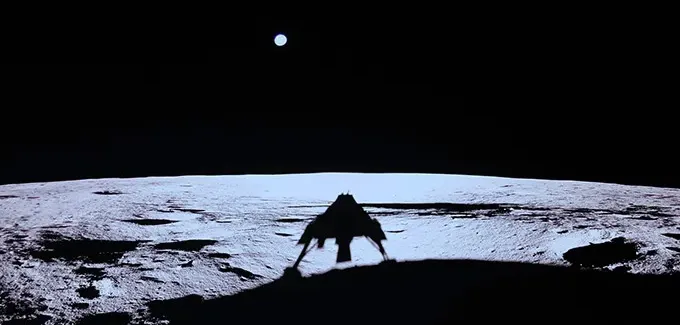
Blue Ghost lunar lander captures its own shadow on the Moon.
On a more sobering note, a study published in May calculated the potential for Earth to be flung from its orbital path due to the gravitational effects of a passing star—though the probability remains exceedingly low at just 0.2% over the next five billion years.
Looking Ahead
With a growing list of cosmic stories and discoveries, 2025 left us with a renewed sense of wonder about our universe. The continuous exploration and discovery pave the way for future breakthroughs across various fields of astronomy and space science.
To explore more remarkable stories and ongoing research, check out additional reports on space exploration. As humanity takes further steps into the cosmos, we remain curious about what lies ahead for deep-space inquiries and terrestrial reflections alike.