



Rapid Evolution After the Dinosaurs: New Insights into Life’s Resilience
In the aftermath of the catastrophic Chicxulub asteroid impact that led to the extinction of the dinosaurs, life on Earth bounced back with surprising speed, recent research suggests. A study published in the journal Geology has provided new insights into how quickly marine species began to recover, prompting scientists to reconsider the timelines of evolution and the resilience of ecosystems.
The Rapid Resurgence of Marine Life
The study, led by Christopher Lowery, a paleoceanographer at the University of Texas at Austin, utilized sedimentation rates to track the emergence of marine species in the aftermath of the mass extinction event that occurred 66 million years ago. The research found that the first known marine species, Parvularugoglobigerina eugubina, made its appearance only about 6,400 years post-impact, vastly quicker than the previously accepted estimate of 30,000 years.
The significance of this finding lies in its implications for understanding evolutionary processes. Lowery remarked, “This really helps us understand how quickly species can evolve,” emphasizing that the study reveals a faster-than-expected recovery for ecosystems after extensive destruction.
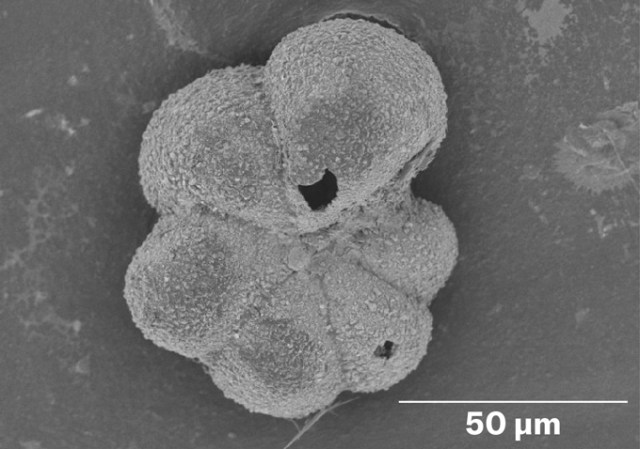
Image Source: Chris Lowery
Techniques and Methodology
To arrive at this surprising conclusion, Lowery and his colleagues combined data from multiple sediment cores taken from the Chicxulub crater and other global marine deposits. The technique involved measuring helium-3, a rare isotope that accumulates in sediments at a consistent rate. This method allowed them to accurately determine the sedimentation rates immediately following the Chicxulub impact.
Their analysis included data from multiple regions, such as Italy, Spain, and Tunisia, revealing that new plankton species began appearing almost immediately after the catastrophe. This rapid emergence of species contrasts starkly with the previously held belief that recovery would take much longer.
A Broader Context of Evolutionary Speed
This research does not exist in isolation. A parallel study by paleobiologist Brian Huber from the Smithsonian’s National Museum of Natural History suggests that new species could have appeared even sooner, potentially within decades after the impact. By analyzing temperature signals locked in foraminifera shells and modeling the climate aftermath of the impact, Huber's study indicates that the skies cleared rapidly from the soot and dust that initially darkened the atmosphere, setting the stage for evolutionary change in oceanic life.
Implications for Modern-Day Ecosystems
The findings not only shed light on the rapid resilience of ancient ecosystems but also hold lessons for contemporary ecological challenges. As climate change and human activities accelerate ongoing environmental shifts, understanding how life can adapt and recover from severe disruptions becomes increasingly crucial.
Paleobiologist Vivi Vajda remarked, “Life really starts to rebound as soon as there is any possibility,” supporting the notion that ecological recovery can occur quickly given the right conditions. However, Lowery cautioned that while evolution can respond swiftly, complete ecosystem recovery remains a lengthy process, taking millions of years to achieve full biodiversity.
Conclusion
This research invites a reevaluation of evolutionary timelines, highlighting a profound capacity for life to innovate and adapt after catastrophic events. It serves as a reminder of the resilience of biodiversity in the face of upheaval, a quality that may hold insights for our current and future ecological crises. For a deeper dive into the intricacies of marine biodiversity and the historical recovery from mass extinctions, read the full article at Science News.