




Greenland Sharks Share Secrets of Longevity That Could Transform Aging Research
In the deep, icy waters of the Arctic and North Atlantic, Greenland sharks are rewriting the narrative of aging. These remarkable creatures, known scientifically as Somniosus microcephalus, can live for over 400 years—making them the longest-lived vertebrates on Earth. Recent studies reveal that their extraordinary lifespan may be supported by unique anti-aging mechanisms, particularly in their eyes and heart. Scientists believe these findings could pave the way for advancements in regenerative medicine and therapies aimed at combating age-related organ deterioration in humans.
The Mystery of the Greenland Shark's Longevity
Greenland sharks have been dubbed "ancient grandpa sharks" for a good reason. Their longevity has fascinated marine biologists and aging researchers alike. A team of scientists led by biologist Lily Fogg from the University of Basel recently explored whether these sharks possess valuable biological secrets for longevity and vitality that could apply to human health.
Fogg's research focused on the sharks' eyes. Common perception suggested these creatures might be visually impaired, but her team's findings challenged that assumption. By examining eye tissues from ten Greenland sharks, some of which were as old as 150 years, the researchers concluded that they possess sophisticated cellular mechanisms for seeing in the low-light conditions of their deep-sea habitats. Their research published in Nature Communications on January 5, 2026, demonstrated that Greenland sharks have the necessary biochemical tools to maintain eye functionality over their extended lifespans.
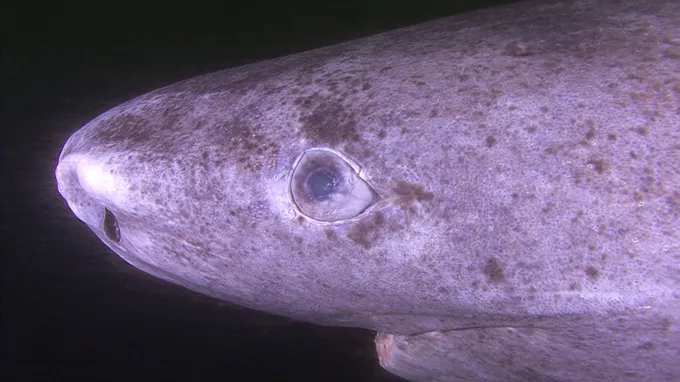
The study revealed that the sharks' eye tissues exhibited minimal degradation typically associated with aging. Such durability could be attributed to heightened activity in their DNA repair mechanisms, enabling them to effectively fix cellular damage. This adaptive feature suggests these sharks experience a remarkably efficient process for maintaining tissue health over decades.
Heart Health: The Other Side of Aging
While the eyes of Greenland sharks seem to exhibit impressive resilience against aging, their hearts tell a different story. Recent research led by physiologist Alessandro Cellerino of the Scuola Normale Superiore in Pisa, Italy, highlighted that the sharks' hearts accumulate scars and damage over time. In human terms, these phenomena are commonly indicators of cardiovascular disease, including reduced efficiency in blood circulation due to stiffening of the heart muscle.
Cellerino's team dissected and studied the hearts of six Greenland sharks, documenting the presence of scar tissue and cellular damage indicative of an aging organ. Surprisingly, despite these injuries, the sharks' hearts continue to function effectively. This anomaly raises intriguing questions about the unique biological mechanisms that allow their cardiovascular systems to remain functional despite wear and tear that would incapacitate other species.
Researchers speculate that the heart's resilience might stem from protective hormonal responses that compensate for age-related damage.
Implications for Human Health
Both studies bring forth significant insights into how these creatures manage to thrive well into their middle ages. Ecologist Catherine Macdonald from the University of Miami expresses optimism about the implications of these discoveries, noting the dual necessity of repair and maintenance in long-lived species like the Greenland shark. "Understanding the underlying mechanisms of the sharks' longevity could unlock secrets of age-related disorders in humans," she stated.
However, experts urge caution against jumping to immediate applications in human health. Macdonald clarified, “The research doesn’t suggest that one should start consuming Greenland shark blood or any other extreme measures.” The complexity of translating these biological mechanisms into practical therapies for humans will require years of additional study.
A Step Towards Decoding Aging
As scientists continue to unravel the mysteries surrounding Greenland sharks, their findings may one day lead to groundbreaking advancements in regenerative medicine, particularly in the treatment of age-related organ failures. The research emphasizes a growing interest in studying long-lived species that could offer essential clues into the biological processes of aging and longevity.
The Greenland shark stands as a testament to nature's incredible capacity for adaptation and resilience. Exploring its life can help researchers better understand not just marine biology but also the potential to extend and enhance human health.
Learn More
For additional articles on animal biology and longevity research, stay tuned to our portal for the latest updates and discoveries in the realm of science.