




New Fossil Discovery Challenges Long-Held Beliefs About Early Ape Evolution
Recent paleontological findings are shaking the foundations of our understanding of early ape evolution, suggesting that our primate ancestors may have originated in North Africa or the Middle East rather than the throes of East Africa. This groundbreaking discovery, centering around a fossil species named Masripithecus recently unearthed in Egypt, has sparked interest and re-evaluation among scientists and historians alike.
Fossil Discovery: A Game-Changer in Primate Evolution
Published on March 26 in the journal Science, the fossil evidence reveals Masripithecus, an early ape that lived approximately 17 million years ago during the early Miocene epoch. Dr. Shorouq Al-Ashqar, a paleontologist at Mansoura University, Egypt, led a team that initiated a project exploring the Wadi Moghra site, a known fossil hotspot in northern Egypt.
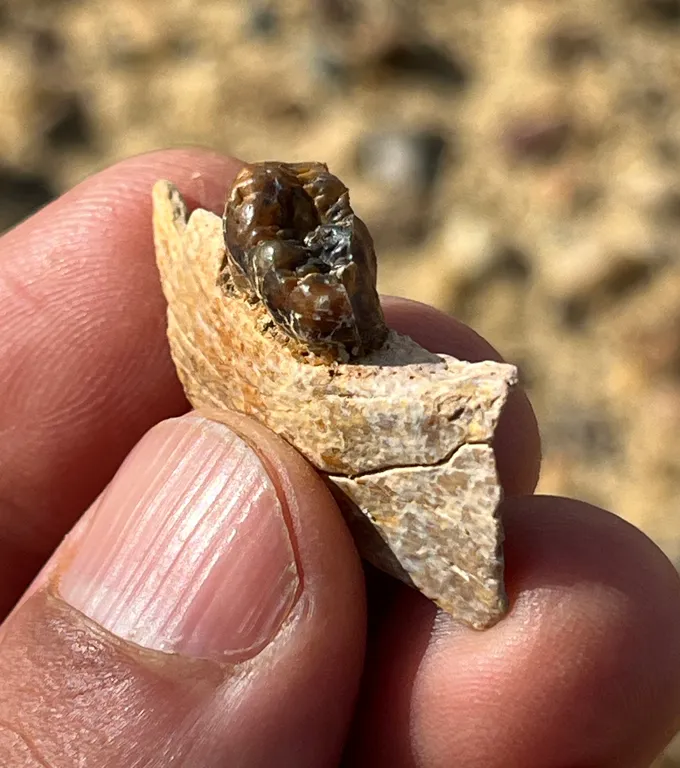
“Until now, the entire story of early ape evolution was told by only a small corner of the continent,” Dr. Al-Ashqar stated, reflecting on the prevailing focus on East African fossils. She discovered a lower jaw fragment with a wisdom tooth during the team’s research and immediately recognized its significance as an ape fossil.
Dr. Al-Ashqar highlighted the key differences between ape and monkey teeth, noting the flattish structure of the ape's teeth as markedly distinct from those of monkeys. After comparative analysis with existing fossil species, the team identified the jaw's owner as a new genus and species—Masripithecus moghraensis, meaning "Egyptian ape from Moghra."
Insights Into Early Diets and Habitats
Based on its dental structure, it is suggested that Masripithecus subsisted on a varied diet of fruits, nuts, and seeds, well-suited to the subtropical and tropical forests that characterized Egypt’s environment at that time. This insight into its dietary habits augments our understanding of the ecological factors influencing early ape evolution.
The unique characteristics of apes, such as greater body size and the absence of tails, are pivotal in delineating their relationships with modern primates like gorillas and orangutans. The research team created a phylogenetic tree using genetic data from modern apes merged with anatomical features from both extant and extinct species. The results indicated a potential evolutionary origin for apes in more northern regions of Africa.
Revising the Ape Evolution Narrative
This discovery points to a broader narrative where early apes possibly spread from North Africa and the Middle East into Eurasia, with subsequent migrations into Africa. Paleontologist Susanne Cote from the University of Calgary echoed Dr. Al-Ashqar's sentiments, stating, “There seems to be significant potential for more discoveries across regions in Africa that have been relatively unexplored in the fossil record.”
Fellow paleontologist James Rossie from Stony Brook University acknowledged the implications of the finding, asserting that it confirms the existence of substantial “blind spots” in our understanding of primate evolution in regions beyond East Africa. His insights reinforce the need for further exploration in areas across North Africa, such as Morocco, Tunisia, and Libya, as future paleontological work may unearth additional early ape fossils.
Conclusion: Unfolding a Richer Story of Our Ancestry
The Masripithecus discovery presents a compelling case for re-evaluating long-held beliefs regarding early ape evolution. The findings stand not only as a testament to the importance of ongoing fossil excavations in new territories but also as a reminder that the story of human ancestry is far from fully written.
As researchers continue their work in the region, they are hopeful that these initial findings will pave the way for unearthing further evidence that completes the picture of early primate evolution, bridging crucial gaps in our understanding of how modern apes—and ultimately, humans—came to be.
For more insights into discoveries that redefine our past, you can explore related articles on Paleontology.